
WidgoReview: a website chat that answers and books
Freemium
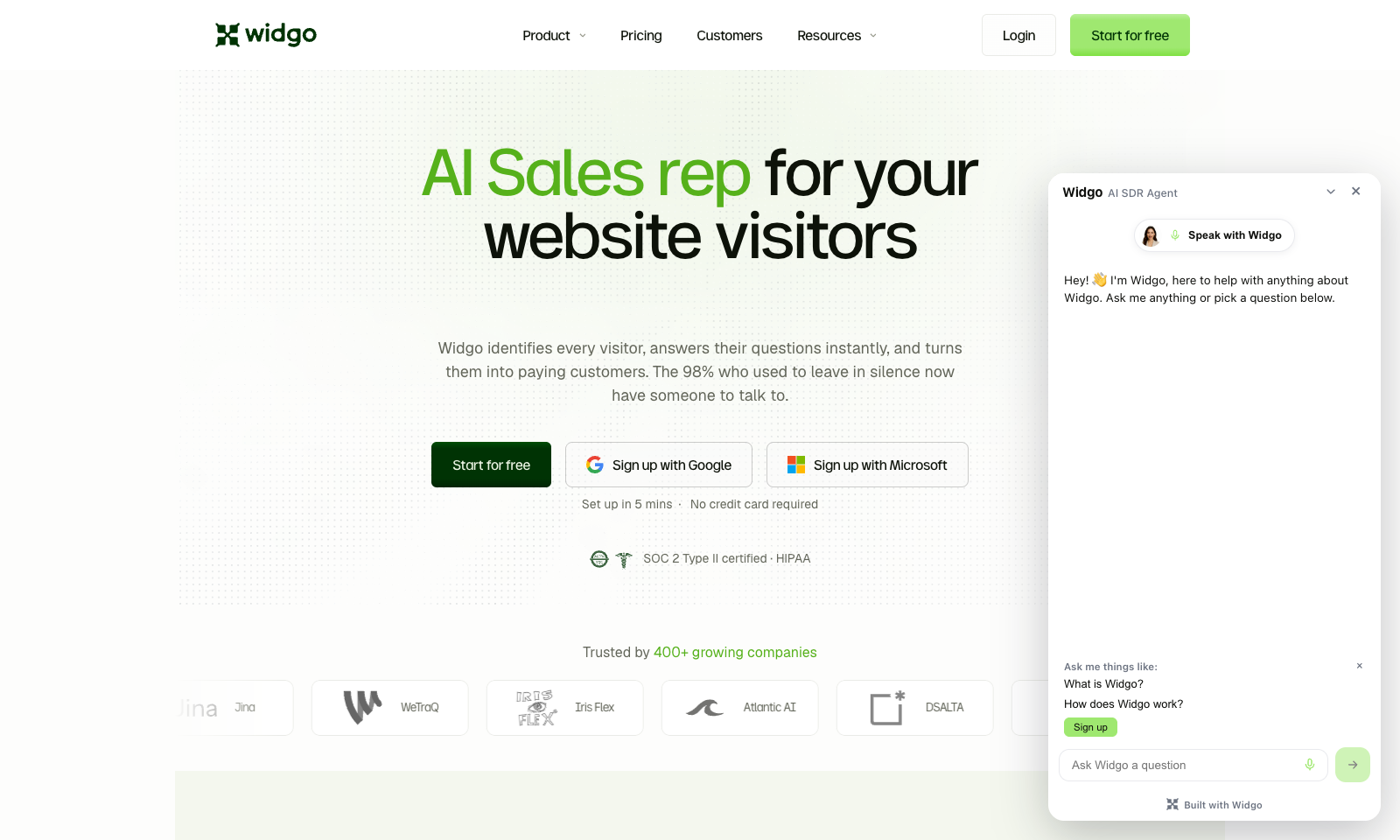
Widgo puts a sales assistant on your website that answers visitors from your own pages and documents. Installation is one line of code. It reads the site, drafts a knowledge base you approve, and then answers in the visitor's language with the source attached. While it talks, it works out who is asking, including person, company, and role, scores the lead from 0 to 100 with a reason, and books a meeting into a real calendar slot inside the chat. You get a conversations inbox, a replay of each visit, and alerts in Slack or Teams when someone looks ready to buy. Free is 500 visitors a month on one website, with no card, and it includes visitor identification, scoring, replay, and Cal.com booking. Growth is $249 a month for 2,000 visitors, adding CRM sync with HubSpot, Attio, or Close. It will not answer from anything you have not approved.
Freemium
Keywords
website chat, ai sales agent, lead scoring, demo booking, visitor identification
- Answers from approved sources: A knowledge base built from your site that you sign off, with citations in every reply.
- Knows who is asking: Identifies the visitor's company and role while the conversation runs.
- Scores with reasons: A 0 to 100 lead score and the signals behind it.
- Books in chat: Real calendar slots through Cal.com, without sending the visitor to a form.
- Generous free tier: 500 visitors a month, one site, no card. Growth $249 a month.
TMRW VERDICT
The contact form, replaced by someone who answers
by TMRW Team·Sep 26, 2026
Most small-business websites end in a form that nobody fills in. Widgo's argument is that the visitor had a question, such as whether it works with HubSpot or what onboarding takes, and left because nobody answered. The widget on its own homepage is the product demo, and answering only from approved content with a citation is the right guardrail. A website bot that invents a price is worse than no bot at all.
Reception.ai, which we list, answers the phone. Widgo answers the website. The pitch is aimed at companies that sell through demos, and a café or a salon will get less from visitor identification than a consultancy or a software company will. The free plan's 500 visitors is generous enough to find out whether it books real meetings. The jump to $249 a month is steep, so stay on free until the calendar proves it.
Best for service businesses and small B2B companies with steady traffic and a sales call at the end. Skip it if your site gets a few dozen visits a month.