
WZRDReview: documents the reader can talk to
Freemium
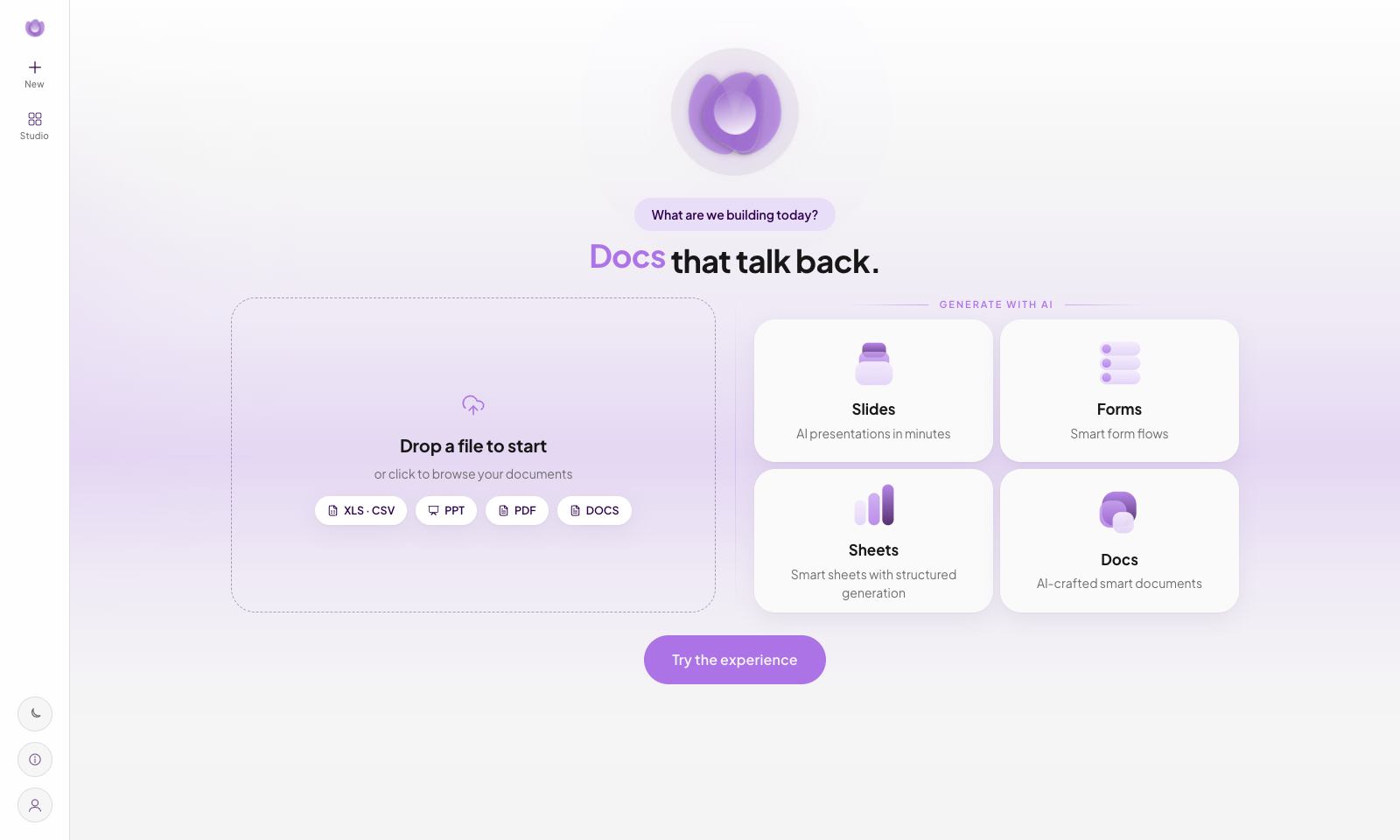
WZRD turns a document into something the reader can talk to. Upload a PDF, a deck, a spreadsheet, or a form, or describe one, and it builds an interactive version with a voice agent inside. A proposal can walk a client through its own pricing and answer "what does this actually cost?" A form collects answers by voice or typing. A sheet explains its numbers out loud. You publish it as a wzrd.to link, a QR code, or a private invite. The studio is simple: a drop zone for spreadsheets, slides, PDFs, and documents, plus four generators for Slides, Forms, Sheets, and Docs. Signatures and file uploads can sit inside the experience. Free covers five projects and 30 voice sessions, once, with WZRD branding. Starter is $15 a month for 60 sessions and adds analytics, Maker is $29, and Builder $79. A voice session counts in full as soon as it starts. Skip it if your reader will print the file.
Freemium
Keywords
interactive documents, voice agent, proposals, forms, presentations, client onboarding
- Upload or generate: Bring a PDF, deck, spreadsheet, or document, or create Slides, Forms, Sheets, or Docs from a prompt.
- Documents that answer back: Readers can listen, ask questions, and respond by voice or text.
- Proposals and intake in one: Signatures and file collection live inside the experience.
- Share and track: Publish as a link, QR code, or private invite. Engagement analytics start on Starter.
- Metered on voice: Free is 5 projects and 30 one-time sessions. Starter $15, Maker $29, Builder $79 a month.
TMRW VERDICT
For the proposal nobody reads to page 14
by TMRW Team·Sep 26, 2026
Gamma, which we list, helps you make a deck faster. WZRD bets on the other end: the person receiving it. A client who will not read an 18-page proposal might still ask a question out loud, and WZRD answers from the document. That is a real job for freelancers, agencies, and anyone whose form or policy generates the same five emails every week. The studio is clean, and the free plan is enough to test it on one real proposal.
The risk is that recipients do not want to talk to a document. Try it with one client before rebuilding your sales process around it. Voice sessions are the meter, and they count on start, so a curious prospect who opens the agent three times uses three. Keep the document itself strong. If the only way to understand a proposal is to ask the agent, the proposal is the problem.
Best for freelancers and small teams sending proposals, onboarding forms, or policy documents that create repeat questions. Skip it for internal documents people already skim, and for decks you present live, where Gamma is enough.